Cruise Ship Starlink Network: Solving the Wrong Bottleneck
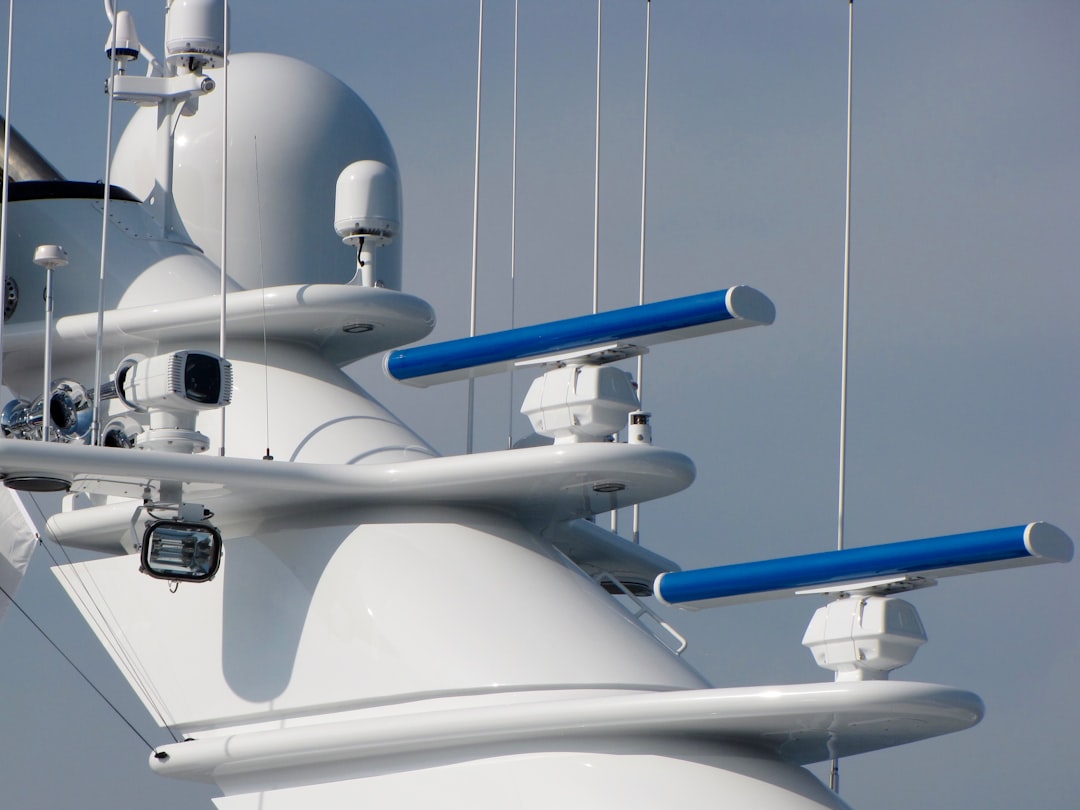
For two decades, the limiting factor on cruise ship connectivity was never in question: satellite bandwidth. VSAT links measured in single-digit megabits had to be rationed across thousands of passengers, crew operations, and revenue systems, and every network design decision started from that scarcity. Low Earth orbit satellite service changed the equation almost overnight. But the projects we get called into now, on ships that have already switched over, aren't bandwidth problems. They're on-board network problems that a fast cruise ship Starlink network exposes for the first time.
That's the part fleet operators tend to underestimate. Buying more bandwidth from orbit doesn't automatically move more bandwidth through the ship. If the shipboard LAN, Wi-Fi, and switching fabric were designed around the old scarcity, the new capacity mostly stops at the satellite dome.
What Starlink Actually Changed for Ships
Starlink Maritime's published specifications list download speeds of up to 220 Mbps per terminal, a figure that would have sounded implausible on a geostationary VSAT link a few years ago (source: Starlink Maritime). Just as important as the raw throughput is the latency: because the satellites orbit roughly 550 km up instead of the 35,786 km of a geostationary bird, round-trip latency drops from several hundred milliseconds to something closer to typical broadband. That's the difference between a shipboard video call that works and one that doesn't.
Major cruise lines moved fast once the technology matured. Royal Caribbean Group and MSC Cruises have both rolled Starlink out across their fleets, and newer entrants like Virgin Voyages built it into their Wi-Fi offering from day one (source: The Points Guy). Operators commonly pair several terminals per vessel for aggregate capacity and redundancy rather than relying on a single dish. We covered the deeper technical contrast between satellite classes in Maritime Networking Isn't Land Networking on Water — the short version is that a cruise ship Starlink network behaves, from a latency and jitter standpoint, much closer to a terrestrial ISP link than anything ships have had before.
Why the On-Board LAN Becomes the New Bottleneck
Most shipboard networks in service today were designed and cabled when the WAN link was the constraint. Access point density in cabin corridors was sized for occasional email and messaging, not for streaming, video calls, and smart-TV apps running in every cabin simultaneously. Switch uplinks between IDF closets and the core were provisioned as 1 Gbps trunks because nothing upstream could fill a bigger pipe anyway. None of those assumptions survive contact with a cruise ship Starlink network delivering ten to twenty times the bandwidth of the VSAT link it replaced.
The result is a familiar pattern: guests report slow Wi-Fi in their cabins even though the ship's total internet capacity has gone up, sometimes dramatically. The bottleneck simply moved from the satellite dome to the access layer.
- Access point density and placement: corridors and cabin blocks built for light usage now need higher-density Wi-Fi 6E/7 coverage to actually use the available bandwidth in each cabin.
- Backhaul cabling: 1 Gbps switch uplinks and legacy copper runs between decks become the choke point once the WAN link stops being the limit.
- PoE budget: higher-throughput access points typically draw more power, and older switch PoE budgets were sized for previous-generation hardware.
- Traffic prioritization: without QoS, bandwidth-hungry guest streaming can crowd out POS, crew communications, and bridge-adjacent systems sharing the same backhaul.
- Segmentation: guest, crew, POS, and operational traffic need to stay logically separated regardless of how much raw bandwidth is available — more bandwidth without segmentation just means problems propagate faster.
"Ships that upgrade the satellite link without upgrading the network behind it end up paying for bandwidth their own infrastructure can't deliver to a single cabin."
What a Cruise Ship Starlink Network Actually Requires Onboard
Designing a shipboard network around Starlink-class bandwidth is a different exercise than designing one around a scarce VSAT link. A few of the changes we prioritize when a fleet operator brings us in after a Starlink upgrade:
Redesigned Wi-Fi for the Bandwidth That's Actually There
Wider channels, higher-density access points in cabin corridors, and current-generation radios so guest devices can pull down more than a fraction of what the ship now has available. This is the single most visible fix, since it's what guests actually experience in their cabins.
Backhaul That Doesn't Cap the Access Layer
Switch uplinks and inter-deck trunks sized for the new WAN capacity, not the old one. A 220 Mbps-class satellite link feeding into a network still built around 1 Gbps shared uplinks across dozens of access points leaves most of that capacity unused at the edge.
Segmentation and QoS as a Baseline, Not an Afterthought
Guest Wi-Fi, POS and casino systems, crew communications, and any systems adjacent to navigation or safety need to sit on properly segmented VLANs with traffic shaping in place — the same discipline we recommend for any high-density network, covered in more depth in our piece on high-density Wi-Fi design.
Redundancy That Doesn't Assume One Link Is Enough
A cruise ship Starlink network is still a satellite link, subject to weather, coverage gaps in some regions, and hardware failure. The ships getting the most reliable outcomes pair Starlink with a secondary link — either a second Starlink terminal or a traditional VSAT fallback — and automated failover between them, rather than treating LEO satellite as a single point of dependency.
We wrote in detail about why that redundancy question isn't optional in What a Single Day of Network Downtime Costs a Cruise Ship: the financial exposure from an outage doesn't shrink just because the satellite technology improved. If anything, guest expectations rise with the bandwidth, which raises the cost of losing it.
Common Mistakes We See on Newly Upgraded Ships
A handful of patterns show up repeatedly when we're brought in to assess a ship that has already switched to Starlink:
- Treating the satellite upgrade as the whole project: the contract with the satellite provider gets signed and installed, but the on-board network refresh gets deferred to "phase two," which then never gets funded because the bandwidth already technically arrived.
- Leaving legacy VSAT as the only backup: a slow fallback link is better than nothing, but if guests have gotten used to Starlink-class speeds, a failover to a much slower secondary link still reads to them as an outage.
- Under-provisioning crew and operational networks: upgrade projects tend to focus on guest-facing Wi-Fi because that's where the complaints come from, while crew communications and back-of-house systems keep running on the same constrained infrastructure as before.
- Skipping a proper site survey after the upgrade: cabin blocks, atriums, and outdoor deck areas each have different RF characteristics, and a Wi-Fi layout designed for a low-bandwidth era rarely maps cleanly onto Starlink-class demand without re-surveying.
Each of these is fixable, but they're easiest and cheapest to address as part of the same project that brings Starlink onboard in the first place, rather than as a separate emergency once guest complaints start arriving.
The ROI Case for Fixing the Network, Not Just the Satellite
Fleet operators who have already signed a Starlink Maritime contract have effectively pre-paid for bandwidth their ship may not be able to deliver to guests yet. Closing that gap — through access layer upgrades, backhaul capacity, segmentation, and redundancy — is what turns the satellite investment into a guest experience improvement rather than a line item that shows up in the budget without showing up in reviews.
Our network infrastructure services cover exactly this handoff: assessing the on-board network against the new satellite capacity, and designing the access, backhaul, and redundancy layers to match it. For maritime-specific engagements, our maritime network solutions team has done this evaluation across cruise, ferry, and offshore fleets.
If your ship has already made the switch to a cruise ship Starlink network and guest Wi-Fi still isn't matching the promise, that's a shipboard network design question, not a satellite question. Contact our team for an assessment of what's actually limiting throughput between the dome and the cabin.