Maritime Networking Isn't Land Networking on Water
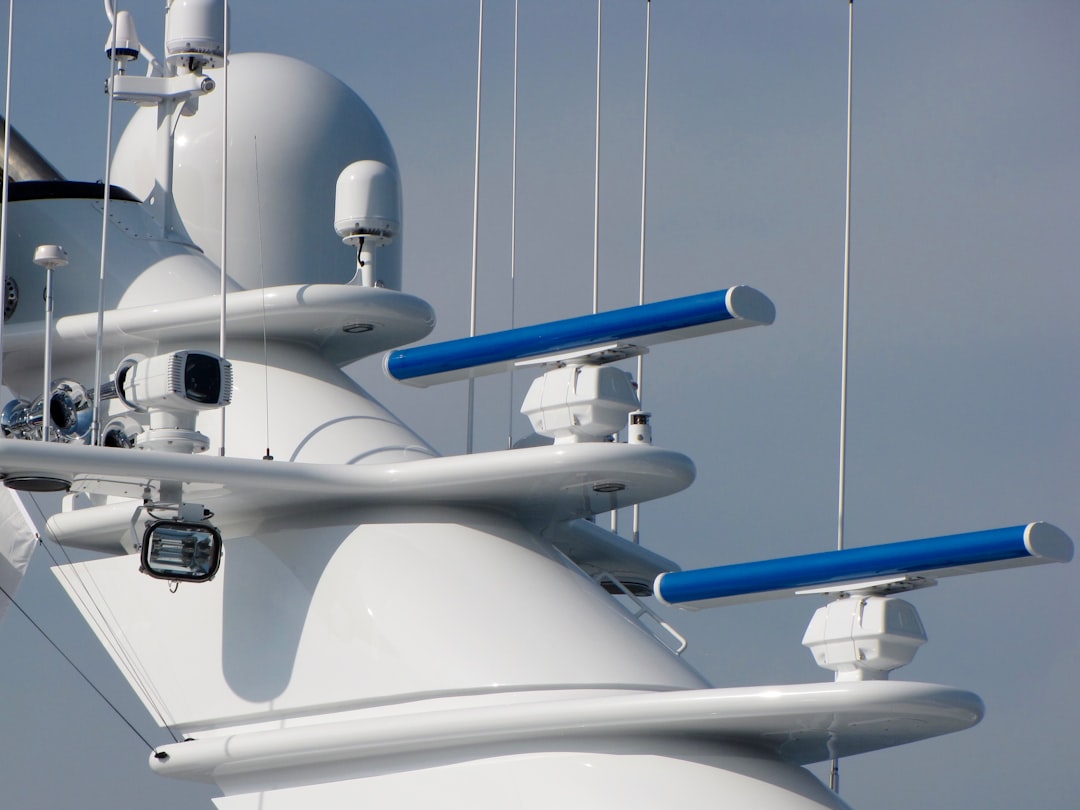
If your current IT provider approaches your fleet's networking challenges the same way they'd design an office building's infrastructure, you're likely paying more than you should—in operational costs, passenger satisfaction, and competitive advantage.
The difference between land-based and maritime networking isn't just about adding satellite dishes. It's a fundamental shift in architecture, economics, regulatory compliance, and operational reality that separates true maritime specialists from well-intentioned generalists.
The Latency Reality: When Physics Becomes Your Problem
On land, network latency is measured in tens of milliseconds. Applications are built assuming near-instant response times. At sea, those assumptions break catastrophically.
Geostationary Satellite: The 600ms Challenge
Traditional VSAT connectivity relies on geostationary satellites positioned 35,786 kilometers above Earth. The round-trip journey for a data packet—from ship to satellite to ground station and back—introduces approximately 600-700 milliseconds of latency before your network equipment even processes the request.
Here's what that means in practice:
- VoIP quality degrades significantly: Conversations develop noticeable lag, making natural dialogue difficult. Crew video calls home become frustrating experiences rather than morale boosters.
- Real-time payment processing stumbles: Credit card authorizations that complete in 2 seconds on land can take 8-12 seconds at sea, creating guest frustration at point-of-sale terminals and bars.
- Video conferencing becomes challenging: Executive meetings from the ship require careful management. Standard conferencing platforms designed for land networks struggle with the delay.
- Cloud application responsiveness suffers: Every database query, every API call, every file sync operation carries that baseline penalty.
LEO Constellations: The New Frontier
Low Earth Orbit satellite services like Starlink and OneWeb operate at approximately 550-1,200 kilometers altitude, dramatically reducing latency to 20-50 milliseconds—comparable to land-based connections. However, they introduce different challenges: more frequent satellite handoffs, varying coverage in polar and equatorial regions, and questions about bandwidth guarantees during peak demand.
Maritime specialists understand how to architect hybrid solutions that leverage both technologies strategically, not just bolt one or the other onto existing infrastructure.
Bandwidth Economics: Why Every Packet Matters
Your land-based IT partner thinks in terms of bandwidth abundance. Maritime networking requires thinking in terms of bandwidth scarcity and economic reality.
"On land, network bandwidth is cheap and abundant. At sea, every megabyte has a direct cost that impacts your operating budget."
Consider the economics:
- Land-based connectivity: $50-200 per month for unlimited high-speed internet
- VSAT connectivity: $3-15 per megabyte for some services, or $15,000-50,000+ per month for committed information rates
This economic reality demands aggressive traffic shaping and application prioritization that land-based IT teams rarely implement:
- Application-aware routing: Critical business applications (payment processing, safety systems, operational communications) receive priority over guest entertainment
- Compression at every layer: Web proxy caching, video transcoding, software update management—all designed to minimize satellite bandwidth consumption
- Time-of-day bandwidth allocation: Different policies for port vs. sea, day vs. night, based on actual usage patterns and business priorities
- Intelligent content delivery: Pre-caching popular content while in port, streaming optimization that adapts to available bandwidth
We've seen vessels reduce satellite bandwidth costs by 40-60% through proper traffic management—without degrading the guest or crew experience. Land-based IT teams, unfamiliar with these constraints, often implement overly permissive policies that hemorrhage money on unnecessary traffic.
Regulatory Complexity: Multiple Jurisdictions, Multiple Rules
Your office building operates under one set of regulations. Your ships operate under constantly shifting regulatory frameworks as they move through international waters and different territorial jurisdictions.
Flag State Variations
Network infrastructure requirements vary significantly by flag state:
- Bahamas: Specific requirements for communication systems redundancy and data retention
- Malta: Different certification requirements for safety-critical network components
- Panama: Distinct inspection protocols and documentation standards
Maritime IT specialists maintain expertise across these varying requirements. Land-based providers often discover flag state compliance issues during inspections—an expensive and operationally disruptive time to learn.
GMDSS Integration Requirements
The Global Maritime Distress and Safety System isn't optional. Your network infrastructure must integrate with GMDSS without interfering with safety-critical communications. This requires specific architectural decisions about network segmentation, failover priorities, and emergency communication paths that land-based IT teams rarely encounter.
Data Sovereignty While Moving
When your ship sails through territorial waters, whose data protection laws apply? The flag state's? The coastal nation's? The passenger's country of origin? The answer affects where you can store passenger data, how you handle payment information, and which security standards apply—and it changes with your ship's position.
PCI DSS compliance for onboard payment processing adds another layer: maintaining payment card industry standards while operating on satellite connections with higher latency, ensuring data encryption across constrained bandwidth, and implementing proper network segmentation in space-limited equipment rooms.
Environmental Realities Land Networks Never Face
Your data center runs in a climate-controlled environment with stable power, protection from the elements, and next-day parts delivery. Your ships operate in a fundamentally different reality.
Constant Vibration and Motion
Network switches, routers, and servers aren't designed to operate under constant vibration. Standard rack-mounted equipment can develop connector issues, hard drive failures increase, and mechanical components wear faster. Maritime-grade equipment uses different mounting systems, vibration damping, and component selection.
Salt Air Corrosion
Corrosion isn't just a cosmetic issue—it's an operational threat. Connectors corrode, electrical contacts degrade, and even sealed equipment can suffer from salt intrusion over time. Maritime networking requires different materials, protective coatings, and maintenance protocols.
Power Fluctuations and Constraints
Ships experience power quality issues that land facilities rarely encounter: voltage fluctuations during generator switching, harmonic distortion from variable-speed drives, momentary interruptions during heavy seas. Network equipment requires appropriate UPS systems, power conditioning, and surge protection designed for maritime electrical environments.
Space Constraints
Your land-based data center expands as needed. Your equipment rooms on ships are fixed spaces, often in inconvenient locations with limited cooling, restricted cable paths, and no room for expansion. Every installation decision must account for the impossibility of "just adding another rack."
No Next-Day Parts Delivery
When a core switch fails 400 nautical miles from the nearest port, Amazon Prime doesn't help. Maritime networking requires thoughtful redundancy, strategic spare parts inventory, and designs that support remote repair and configuration without specialized on-site expertise.
Crew vs. Guest Traffic: Different Needs, Critical Segmentation
Land networks serve relatively homogeneous user populations. Maritime networks serve fundamentally different user groups with incompatible requirements.
Crew Communications: Low Latency, High Priority
Your crew members are living away from home for months at a time. Their ability to maintain contact with family directly impacts morale, retention, and operational effectiveness. They need:
- Low-latency video calling capabilities for meaningful conversations
- Reliable messaging and email even during peak guest usage
- Guaranteed bandwidth allocation that doesn't disappear when guests stream movies
- Affordable or free data allowances that don't force choosing between family contact and financial burden
Guest Entertainment: High Bandwidth, Managed Expectations
Guests expect connectivity, but their usage patterns differ dramatically from crew needs:
- Video streaming dominates bandwidth consumption
- Social media uploads and photo sharing create spiky, high-bandwidth demands
- Willingness to pay for premium connectivity creates revenue opportunities
- Tolerance for reasonable limitations if properly communicated
Proper network segmentation isn't optional—it's survival. Without it, you face an impossible choice: either crew morale suffers as guests consume available bandwidth, or guest satisfaction declines as you prioritize crew communications.
Maritime specialists implement sophisticated segmentation that ensures both populations receive appropriate service while maintaining operational priorities and safety-critical communications above all.
Failover Isn't a Luxury: When Primary VSAT Goes Down
Your land-based network has redundant internet connections because losing connectivity is inconvenient. Your maritime network needs redundancy because losing connectivity can affect safety, operations, and regulatory compliance.
Consider the reality of a VSAT failure 400 nautical miles from port:
- Payment processing stops: Bars, shops, specialty dining, spa services—all revenue-generating operations that rely on credit card processing halt
- Operational communications fail: Shore-side coordination for port operations, supply chain management, crew scheduling
- Safety reporting disrupted: Weather updates, navigation data synchronization, emergency communication paths
- Passenger expectations violated: In an era where connectivity is expected, complete outages generate immediate complaints and negative reviews
Maritime network design requires true redundancy:
- Multiple VSAT providers: Not just backup equipment, but contracts with different satellite operators using different orbital positions
- LEO constellation backup: Starlink or OneWeb as automatic failover for critical services
- Intelligent failover logic: Different applications failing over based on priority and bandwidth availability
- Regular testing: Scheduled failover drills to ensure backup systems actually work when needed
The Cost of Choosing the Wrong Partner
Choosing a land-based IT provider for maritime networks doesn't just mean suboptimal performance—it means paying the learning-curve tax with your operational budget, passenger satisfaction, and competitive position.
We've encountered vessels where:
- Satellite bandwidth costs were double what properly managed systems require
- VoIP quality was so poor that crew avoided video calls home, directly impacting morale and retention
- Payment processing delays created measurable guest frustration and negative reviews
- Equipment failures occurred monthly because land-grade hardware was installed in maritime environments
- Flag state inspections identified compliance issues requiring expensive emergency remediation
The hidden cost extends beyond direct expenses: opportunity cost from delayed technology adoption, competitive disadvantage as other operators provide better connectivity experiences, and reputation damage from service failures.
Why Maritime Specialists Make the Difference
Maritime networking expertise isn't about being smarter—it's about having solved these specific problems repeatedly across different vessels, flag states, operational profiles, and passenger expectations.
True specialists bring:
- Design patterns proven across multiple flag state requirements
- Vendor relationships with maritime-specific equipment suppliers
- Pre-configured solutions that account for satellite latency in application performance
- Bandwidth optimization techniques that reduce operating costs without degrading service
- Maintenance protocols adapted to parts availability constraints
- Emergency response procedures that work when you're 400 nautical miles from the nearest port
"The question isn't whether your land-based IT provider is competent. The question is whether they've spent years solving the specific challenges that only exist at sea."
Let's Talk About Your Fleet
At Network Consulting & Development, we've spent years solving exactly these problems for cruise operators, ferry services, and maritime companies. We understand that your ships aren't floating office buildings—they're unique operational environments that demand specialized expertise.
If your current provider treats maritime networking as "just add satellites" to their standard approach, you're leaving money on the table and creating unnecessary operational risks.
Our approach delivers:
- Satellite bandwidth cost optimization that reduces monthly expenses 30-50%
- Network architecture designed for latency realities and bandwidth constraints
- Compliance frameworks that work across different flag states
- Equipment selection based on maritime environmental requirements
- Redundancy strategies that actually work when primary systems fail at sea
- Crew and guest traffic management that serves both populations appropriately
Contact our team to discuss how maritime-specific networking expertise can improve your operational efficiency, reduce costs, and enhance both crew satisfaction and guest experience across your fleet.
Because at sea, the difference between generic IT and maritime specialization isn't academic—it's the difference between thriving and merely surviving in an increasingly connected world.